by Alex Pasternack
 "Not bad.” A fresh-faced young man from Hebei province was talking about his job – cleanup around the Olympic Park during an eight-hour workday – as the hulking steel girders of the remarkable National Stadium rose in the distance behind him. He wore a slight grin that seemed completely unrehearsed, far from the city’s ongoing “smile” campaign intended to spread Olympic spirit to the world.
With a year to go until the Games, the biggest coming-out party the world will have ever seen, it’s hard not to find traces of that spirit everywhere in Beijing – on lips, on billboards, on the city’s massive construction sites. Clearly though, it’s a buzz that has little to do with athletics.
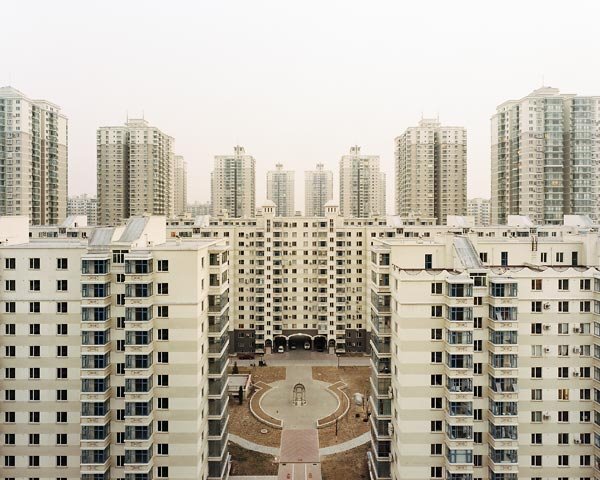
“This is a once in a lifetime opportunity for China,” says Sun Weide, deputy director of the Beijing Organizing Committee for the Games (BOCOG). Despite perpetual concerns about a post-Olympics bubble-burst, the Games, he says, will be nothing short of a great leap forward. “When Sydney held the Games, it had already finished its development,” he explains. “One major difference is that Beijing is in the process of fast modernization and urbanization. We’re not worried about any kind of slowdown.”
Sun’s ability to rattle off statistics is almost as impressive as the numbers themselves: 12 percent annual GDP growth, a USD 8 billion Olympics budget, and half a million visitors – but also 241 “blue sky days” last year, 198km of new subway track, 1 million cars off the roads, and 11 new world-class venues.
But what will those statistics mean on the big day? And with all the attention focused on the largest orgy of international love and nationalism ever to hit China, who has the time or energy to consider what they will mean the morning after?
I asked some in the know to give a glimpse of what the city will be like when the torch arrives, and when it leaves.
Congestion question
This month, Beijing will stage what will likely be the world’s biggest car prohibition in history – one year before the big event. The city will “persuade” one million cars off the roads, including government vehicles and other “non essential” vehicles, in a dry run for next year’s even more serious traffic control measures. Beijing has said that come August ‘08 only “Olympic related” traffic will be allowed to park near the venues; for the rest of us, the best options will be an upgraded public transit system, which will be free to all ticket-holders and Olympics staff.
The officials are optimistic: “Traffic,” says Liu Xiaoming, deputy director of the Beijing Municipal Communications Commission, “will not be a headache at all, but rather will become an enjoyable experience by 2008.”
Others are not so sure, but the results, whatever they may be, will not be for lack of trying. Along with road additions and improvements, the city will expand its use of electronic traffic notice boards and intelligent traffic signals, which change depending on traffic conditions. The government is also said to be exploring car restrictions like those of Shanghai (with its prohibitively priced licenses) or London (with its city-center congestion charge). The city is also attempting to ease traffic in downtown areas by building new municipal centers in places like Yizhuang, Shunyi and Changping. After the Olympics, it is rumored that the city government’s offices will move to the eastern district of Tongzhou, while the former headquarters of the relocated Shougang Steel Group in western Shijingshan will provide the new seat of China’s national government.
But RMB 250 billion in public transit upgrades – said to be the Olympics’ greatest physical legacy to the sprawling metropolis – will likely mark the greatest change to the lives of Beijing’s commuters. By the closing ceremony, a mix of faster bus routes and three much-touted spiffy new subway lines – including the Haidian-CBD line 10 – will make IC (yi ka tong) fare cards a necessity (paper tickets, in fact, will be completely phased out). Also helping push public transit will be an upgraded bus fleet, an increasing portion of which will run on cleaner natural gas or electric hybrid technology. A high-speed airport rail will also whisk travelers to the city’s airport (and its stunning new Norman Foster-designed Terminal 3) in under 20 minutes from stations at Sanyuan Qiao and a massive new transportation terminal at Dongzhimen.
As for Beijing’s reputation as the capital of the “kingdom of bicycles,” it can’t last forever. “With more and more cars in Beijing, they need that road space,” says Duan of Tsinghua. That – and the small possibility for future restrictions on cars – is why even he’s willing to put up with waiting in traffic: he says he’s trading in his bike for a sedan.
Breathing easier
As the city ramps up its USD 13 billion efforts to prepare for the “Green” Olympics, the “haze” (up until this year, the official term was “fog”) is also getting harder to scrub. Though 2006 saw 241 “blue sky days,” exceeding the government’s target by three days, the target of 245 blue skies for this year is one that officials admit will be “very difficult” to achieve.
No wonder: the car, one of the biggest culprits, is growing in number on Beijing’s roads at a rate of 1,100 a day. Starting last month, the city was the first in China to impose Euro-III auto emissions standards, a move that should cut automobile pollutants by 30 percent; by 2008, it has promised to take 300,000 high-emission vehicles off the roads.
Attempts to clean up coal plants and factories in nearby provinces, efforts to tackle heavily polluting companies, and a temporary cessation and slow down of construction projects before, during and after the Games may also improve air quality for the time being.
At the very least, officials say that residents can expect better publicized alerts that will warn of pollution by city district – and an increase in the “experimenting” with rainmaking technology, which will come in handy not only for clearing the summer skies during the opening ceremony, but for washing away the city’s dirt and, er, haze.
Home sweet home?
Breaths are bated, some anxiously, some hopefully, for a burst of Beijing’s property bubble. When the spotlight fades and everyone goes home, the logic goes, the city will no longer be a seller’s market. Problem is, the spotlight isn’t set to fade, Beijing’s population is set to keep growing, incomes will rise, and the addition of new, world-class infrastructure like metros and malls will help keep up overseas and domestic interest.
“Post-Olympics, we don’t really forecast a decline in prices,” says Anna Kalifa, head of research at property firm Jones Lang LaSalle. Though Beijing’s first housing price downturn might be on the cards, due to added supply in the city center and an exodus of foreigners and migrant workers just after the Games, prices won’t dip significantly, especially for areas downtown and near the Olympic venues. And, though schools and other amenities will keep most foreigners on the east side, Kalifa predicts that improved public transit, new shopping centers and the vibrancy of the college areas will draw more attention and development to Beijing’s western side.
One thing sure to make the city more appealing will be a slow down in construction. The city has ordered cranes to stop city-wide this October, and even after they start up again, post-Olympics, the rate of construction is expected to be nothing like as furious as it is at present. That should mean less noise and less dust streaming through the windows of our (rented) apartments.
And while all the development has meant that the city’s famous hutongs may be going the way of the bicycle, some point out happily that the city’s fixation on oppressively large streetscapes is waning, while a sense of civic duty is growing. It’s a shift due to private rather than public interests, says Anna Kalifa. As public gathering areas are becoming more common at shopping centers and office developments, she notes that residential community groups are growing in number as well. Bolstered in no small part by private property laws set to go into effect this autumn, such groups have a strong incentive to maintain the public spaces around their buildings. “It’s the difference between people hanging laundry outside their windows or throwing trash everywhere and not being able to do that,” she says.
Reaching out
When the lights go up on the opening ceremony on August 8, 2008, the occasion will be significant not just for what’s seen, but how. Beijing’s will not only be the first Olympics to be broadcast in high definition TV, but also across digital channels and the Internet, allowing a Beijinger, for instance, to choose to watch the ceremony on a so-called “3G” mobile phone, a growing number of screens in the back of Beijing’s cabs, or the city’s new TV-equipped subway lines.
“The Olympics gives us time to catch up in technology, but it also changes the entire communication infrastructure in China,” says Hu Bo, who produced the promotional films for Beijing’s two Olympic bids. A host of new “hardware” isn’t the only thing Beijing gains from the Games, he says, but a chance to push forward the “software” – the technical skills and creative content – crucial to shaping the country’s cultural realm and, come the lighting of the flame in Beijing, its international image.
“Beijing will have one hour to contain 5,000 years of history,” says Greg Groggel, a writer studying the Olympics Games’ effects on their host countries, of the opening ceremony. The stakes in Beijing are arguably higher than they were in the host cities typically compared with Beijing: Seoul in 1988 and Tokyo in 1964. “This is a chance for China to share something beyond economic power,” he says.
That something, says media analyst Shaun Chang, is now growing in the capital, thanks both to cultural institutions like museums and foundations but also to the widening creative realm opened by the Internet and digital technologies. “There’s this space in which we are allowed to grow and develop,” she says. Despite some hurdles faced by China’s web-based culture, “the government is creating a more relaxed environment to allow investment into this area.”
Public works and a charm offensive
Creating a good impression for the hundreds of thousands set to land in Beijing in 2008, and the surge of visitors expected afterwards, is an Olympian challenge that Beijing is not leaving up to chance. On an aesthetic level, the city government’s plans include traditional renovations of popular streets, such as Yonghegong Dajie, and the expansion of green spaces. In addition to the sprawling Olympic Forest Park in the north, Beijing is doing what it can to spruce up the city’s canals and has promised 30 more parks will be added to the outskirts of the city by 2008.
Handicapped access is also a concern for Olympics and city officials. David Tool, a volunteer advisor to the city, says that while the city’s cultural sites are beginning to improve access, hotels are lagging. For instance, Tool says, the hotel hosting the Paralympics Organizing Committee only has ten wheelchair-accessible rooms.
And among those initiatives set to leave a mark on the city, perhaps none is as obvious as the spread of English across the city’s street signs and menus. “The English signage and recorded messages will be okay for the Olympics for the most part,” explains Tool, who has also led a campaign to clean up Beijing’s written English. Spoken English is just as much a concern for him as for the government, which is behind a seemingly unending stream of English campaigns. Enabling more interaction between foreigners and Chinese volunteers, especially retirees and students, could be one of the Games’ greatest legacies, not only enriching the experiences of visitors and locals, but further blurring the sometimes uncomfortable divide that separates Beijing’s laowai from its laobaixing.
On a more basic level, improvements have also been promised for public bathrooms and food safety, while the government has helped organize training sessions for service staff in everything from professional skills to “Olympic knowledge” (which may or may not mean that hotel staff will be able to settle bets about medalists in the 400 meters at Helsinki ‘52).
Experts are also hoping for a smoothing of the visa procedures at Beijing’s Public Security Bureau, which has yet to announce how it will cope with an unprecedented number of potential lost passports and visa extensions – and an international crowd like none it has ever seen. At least fixing the queuing at places like the PSB is a no-brainer: “Judging from the pre- and post-Olympics situation in Japan and Korea,” says Tool, “Beijingers and eventually all China will adopt the line as the civil way to behave while waiting for anything.”
Also helping to comfort visitors and foreign residents will be a continued influx of international-level services, like hotels (currently about 40 are five-star-rated), movie theaters and malls. “Beijing is easier now than it was just three years ago,” says Jones Lang LaSalle’s Anna Kalifa. In the past six months especially, she detects a shift from a city “where [as a foreigner] you had to know where to go” to a place more like Shanghai or Hong Kong, “where you can see what’s going on.” She claims foreign property investment, which helps draw international brands, helps in noticeable ways. Recently, for instance, the luxury Parisian grocery Fauchon chose to open its first Chinese mainland store at the shopping center Shin Kong Palace.
“People are getting more confident,” says Hu Bo. “When there’s a great expectation on you, you have to deliver more good work.” David Wolf, of corporate advisory firm Wolf Group Asia, says that added confidence will mean improved services and language skills. “When the Olympics are all over, the most important change will be in the minds of the people of Beijing. They will see themselves as living in an international city, and that simple change in perception will have long term consequences.”


 Greg Groggel is on an Olympian mission. The 23-year-old Thomas J. Watson fellow from Omaha, Nebraska has spent two months in each of the former host cities – including Mexico City, Munich, Sarajevo, Sydney, and Seoul – to study the social, economic and political impact of hosting the world’s largest event. Before he left Beijing in July – to return next year, of course – that’s Beijing caught up with the intrepid Olympic observer.
 "We’ve entered the danger period,” Mary Peng of the International Center for Veterinary Services, a private animal hospital in Chaoyang, recently told us. The “danger period” she was referring to covers this time of year, when many foreign dog owners relocate to Beijing – unaware of the 35cm size restrictions on dogs in the downtown area.
  A small article in China Daily last month began simply enough: “On 1 June, the Beijing Waterworks Group announced that the city’s water supply is safe to drink without boiling.” The news could not have come at a better time. For a month, pollution-abetted algae had been taking over China’s lakes – Taihu, Chaohu, Dianchi – turning water the sickly color of Swamp Thing. In February, Evian, that impeccable French mineral eau, was stopped at China’s border, 118,000 liters of it charged with containing an “unacceptable level of bacteria.” To make matters worse, tensions were still publicly boiling over between Danone, the maker of Evian, and its former Chinese partner Wahaha, over an alleged violation of their joint venture. The same week, an op-ed in the China Daily reminded us how “the manufacture and shipping of bottled water adversely impact the environment and the ecology.”
 After the experimentation of her last record, Medulla, it’s hard not to take Björk’s promise of a collaborative “dance” record with a grain of Icelandic sea salt. Yes, she did call in hip-hop guru Timbaland and her old producer Mark Bell (he of the techno blips of Debut and Homogenic). But the un-pretty results here – Earth Intruders, Declare Independence – shake the booty less than the senses, and end up paling in comparison to the sleepy contributions of Antony Hegarty of Antony & the Johnsons, Malian kora player Toumani Diabate, a 10-piece orchestra, and pipa player Min Xiao-Fen. Forget moving bodies: it’s alongside the pipa on I See Who You Are that Björk’s ever-volatile voice moves most. Alex Pasternack
  The communications center for the Games styles itself after a computer motherboard – a design that looks better than it sounds. Water streams down a set of irregular, vertical LED panels, which are carved into the side of the building's shoebox-like envelope, a mix of concrete, aluminum and glass. On the ground floor, architect Zhu Pei (along with the Shenzhen firm Urbanus) borrows the translucent Plexiglas material that covers his Blur Hotel (see Travels in Style, p44) to construct a "digital carpet" – a translucent floor capable of displaying projected images. The building's end facades also rely on a new material: unlike costly stone, which was originally planned, the architects chose a lightweight aluminum that resembles stone at a fraction of the cost of the real thing.
  Like the nearby National Stadium, the National Aquatics Center draws inspiration from nature, but on a microscopic scale. The "Water Cube," as it's become known, is clad with 3,000 air pockets made of a recyclable Teflon-like plastic in a pattern evocative of one of nature's most common shapes: the arrangement of organic cells, or the natural formation of soap bubbles.
 Much ink has been spilled over the China Central Television headquarters, but words still seem as weak as knees before this acrobatic wonder. The building's two 40-story, 60-degree-leaning towers connect by a cantilevered bridge that has inspired as much dismissive disbelief as speechless awe from designers worldwide. According to the project's German co-architect, Ole Scheeren, "It's one of the most complex buildings ever built." Along with Rem Koolhaas, the Dutch architect and founder of OMA, Scheeren created and has been managing the project in Beijing with a team of OMA designers dozens strong. While engineering firm Arup provided the unique engineering feats to make it work in an earthquake zone ("It's the most analyzed building we've done. Actually, it's probably the most analyzed building, period," says Arup's Rory McGowan), it is the army of ten thousand construction workers who really testify to the scale and complexity of this remarkable building, which may be the Chinese government's best answer to the pyramids of Egypt.
  How to position a modern structure within an idyllic natural setting is a special challenge in China, where tradition often demands that architecture accommodate nature. Though that tradition is often broken, the Songjiang Quarry Hotel near Shanghai goes for the opposite extreme: it hugs the side of a 100-meter deep quarry, standing two levels above the rock face and plunging two levels below the lake's bottom. Down there, guests can enjoy an underwater dinner or check into rooms that face a ten-meter-deep aquarium. The bottom levels also provide access to water-based and extreme sports like rock climbing and even (thanks to a planned cantilever above the quarry) bungee jumping.
 Hot potato – or rather, egg; it is not so much the ambition of its complex design, but the surrounding controversy that's delayed the completion of this building for three years. French architect Paul Andreu's much-ballyhooed egg-shaped opera house is more fitting for a science-fiction movie than its Tiananmen digs, say local critics. As such, the building has become a lightning rod for scorn towards foreign architecture across China. Aside from concerns about how the glass dome and the large moat that surrounds it will stand up to the grit of Beijing's environment, the building has been questioned not just for its friendliness to the environment, but for its questionable feng shui: the building's entrance, through a glass tunnel beneath the moat, is more evocative of a traditional tomb than an opera house. The 2004 collapse of an Andreu-designed extension to Paris' Charles de Gaulle airport, which killed two Chinese citizens, didn't help the building's cause.
 If the planners of the Shanghai World Financial Center (WFC) have their way, the title of world's tallest skyscraper will soon belong to China, at least for a moment. Even if the WFC, designed by KPF's Bill Pedersen, is soon eclipsed by other towers (such as Sir Norman Foster's planned Russia Tower in Moscow), when completed in 2008 the 101-story tower will still stand out amidst the forest of skyscrapers rising in Shanghai's Lujiazui financial district in Pudong, which is arguably the planet's tallest neighborhood.
 You might not expect the headquarters of one of China's biggest cigarette manufacturers to be especially environmentally friendly. But Guangdong Tobacco Company's new digs, the Pearl River Tower designed by New York's SOM, takes sustainability to new heights. It aims to be the world's first zero-energy super-tall building. Getting there requires not just green add-ons like solar power but a thorough going-green design from top to bottom.
 If Paul Andreu's bulbous Beijing opera house evokes the UFOs of a fifties' fantasy, Zaha Hadid's Guangzhou concert hall comes from a galaxy much farther away. The halls' stealth-like shapes, meant to replicate river pebbles, blur the line between the freaky, surreal computer-generated world where many of Hadid's adventurous designs tend to remain and the very real banks of the Pearl River.
 Steven Holl and Li Hu's adventurous commercial-residential complex is a perfect compliment to their Beijing Linked Hybrid. Where that development envisions a system of bridged residential towers connected like a dance circle, their Shenzhen project, commissioned by and for real estate developer Vanke, floats above the ground like a flying dragon.
 Somehow, it wasn’t ironic that the Olympic Committee had to drive us to Beijing’s newest subway line in a tour bus. Correction: we weren’t driving at all. We were sitting idle in traffic. Therein was the reason we were visiting the subway in the first place. As the city slowly edges toward Bangkok-style traffic, officials have planned for three new lines in time for the 2008 games, and are promising the world’s largest subway system by 2020. Though it’s not set to open until September, the city is already testing, tuning and touting the north-south line 5, the first addition to its soon-to-be rapidly expanding subway network.
  Permalink
  In other hands or mouths, Andrew Bird’s crossword-puzzle vocabulary and lyrical obsession with science, psychology and obscure history might come across as pretentious; or, worse, pedestrian. But accompanied by his trademark layered violins, glockenspiels and guitars – and his elegant voice, as capable of deadpan as jazzy soul – the Chicagoan’s profundities are like juicy tidbits of a refreshing and witty late Sunday afternoon conversation (or therapy session). Set around modern fears and revelations, the conversation began with 2003’s Weather Systems, Bird’s first solo album, and continued on 2005’s brilliant The Mysterious Production of Eggs. On Armchair Apocrypha, Bird’s ruminations have grown even deeper, with rich musical flourishes to match. On tracks like Heretics, Dark Matter, and Cataracts, Bird isn’t just feeding us food for thought; these are some of the sweetest pop candies of the year. Alex Pasternack
  Bespectacled surrealist musician plus trash-salvaged electronics plus a love for German synths, video games and children’s shows: to get some idea of what this means, just search Youtube for his name. The


 Is RMB 110 million too much for a courtyard? In Beijing – where a full-fledged traditional courtyard home (siheyuan) has become as uncommon as, say, an affordable apartment – maybe not. If the place is one of the city’s choicest courtyards, located in a serene hutong with a view of Houhai, probably not. And, if you’re a Russian billionaire on the prowl for new lao Beijing digs, well, it sounds like a downright bargain.